Wednesday, January 25, 2012

Survival in the Canadian Wilderness: Hatchet and the Brian Books

This winter, fifth graders are taking a walk on the wild side, exploring 1988 Newbery Honor award-winner Hatchet by Gary Paulsen.
A page-turning adventure: After a traumatic plane crash, thirteen-year-old Brian spends fifty-four days alone in the wilderness, learning to survive with courage, determination, and the aid of a hatchet given to him by his mother.  With no time for anger, self-pity, or despair, Brian's survival experience also begins to teach him how to deal with his parents' divorce.  Take a look at a world-premier fifth-grade performance of a dramatic scene from Chapter One:


Gary Paulsen, a Lafayette School favorite: Check out this "author interview," researched and performed by fifth-graders Shane C. and Sean A.


Reading Road Trippers have been creating and collecting all sorts of souvenirs from the Canadian wilderness!
Poster by Patrick S., Wooden Hatchet by Jared P., Paper Hatchet by Brian N.
“We want you to do it again.”  In The River, a sequel to Hatchet, the government asks Brian to return to the wilderness for fifty-four days-- so that astronauts and the military can study techniques that kept him alive during his original survival adventure. The project backfires, leaving Brian stranded with a wounded partner and a dangerous river to navigate.

What if?  In Brian's Winter, a companion book to Hatchet and The River, Gary Paulsen imagines what would have happened to Brian if he had not been rescued from the plane crash and had been forced to survive a winter in the wilderness with only his survival pack and hatchet.

Hatchet by Nicholas D.

Going back in: After his extraordinary experiences surviving alone in the harsh Canadian wilderness, sixteen-year-old Brian finds it increasingly difficult to live as a normal high school student and begins planning a dramatic return to the North-- the place where he feels he really belongs-- to seek his destiny. 


In the North woods: When Brian finds a wounded and whimpering dog one night, he senses danger and worries about his Cree friends who live north of his camp. His instincts tell him to head north, quickly. With his new companion at his side, and with a growing sense of unease, he sets out to learn what happened. 

Hatchet by Sarah R.
We can create our own interactive symphony of wilderness sound with Nature's Orchestra from Canadian Geographic.

by Maxx U. and Josh S.

Monday, January 9, 2012

Yum, Yum... Chocolate-Covered Reading Road Trip Books!

Reading Road Trippers have been devouring The Chocolate Touch by Patrick Skene Catling, the story of a chocolate-loving boy who discovers that there might be such a thing as too much chocolate! Let's sample a delicious book commercial, created by Ahmer K. in Miss Killea's fourth grade class:


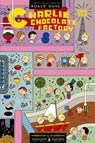
Check out a chocolate-covered classic!  Charlie and the Chocolate Factory by Roald Dahl.  Poor young Charlie Bucket's life is changed forever when he finds one of five golden tickets, allowing him a once-in-a-lifetime opportunity to tour the chocolate factory of the mysterious Willy Wonka.

The Chocolate Touch by Chloe M.
More chocolate in the LMC!  Chocolate Fever by Robert Kimmel Smith.  Henry eats too much chocolate and breaks out in brown bumps. The experience helps him foil some hijackers and teaches him a valuable lesson about self-indulgence.

We're thinking the time is right for a Reading Road Trip to scrumptious Hershey, Pennsylvania-- otherwise known as Chocolatetown, USA:


Milton Hershey: Hershey's Chocolate Creator by Joanne Mattern, examines the amazing life of Milton Snavely Hershey, looking at some of his business ventures and discussing the founding and growth of the Hershey Chocolate Company.
The Hershey's Milk Chocolate Bar Fractions Book and The Hershey's Milk Chocolate Multiplication Book, both by Jerry Pallotta, make math time yummy... with Hershey Bars!
 

The Chocolate Touch Scene Summary by Jaclyn A.

Hershey's Plate by Charlie F.
Fourth grader Charlie F. checked out The Hershey's Milk Chocolate Multiplication Book from the RRT Diner display in the LMC.  He served up a plate of Hershey's chocolate and three facts from the book: 1). Multiplication is a quick way to add equal numbers 2). When a number is multiplied by itself, the product is a square number 3). One, two, three, four, six, and twelve are all factors of twelve.

Inspired by The Chocolate Touch, fourth grader Leonie F. created a Reading Road Trip Chocolate Factory.  She shared some scrumdiddlyumptious homemade chocolate... and her secret recipe:
The plot of The Chocolate Touch is patterned after the Greek myth of King Midas, whose magical wish turned everything he touched into gold. After we've eaten our fill of chocolate, we'll turn our attention to Greek mythology... and chocolate gold coins!
In The Adventures of King Midas by Lynne Reid Banks, King Midas comes to regret his wish to turn all he touches into gold and must deal with a magician, a witch, and a dragon as he tries to undo the magical spell.
Tales of Greek Mythology II: Retold Timeless Classics, retold by L.L. Owens, presents versions of four classic Greek myths about King Midas, Aphrodite and Adonis, Echo and Narcissus, and Oedipus and the Oracle.

Save room for dessert! Let's watch our favorite Swedish Chef prepare Chocolate Mousse-- or maybe that's Moose-- in classic Muppet style.


In the mood for a delectable rich-in-history treat?  Check out Mercedes and the Chocolate Pilot: A True Story of the Berlin Airlift and the Candy That Dropped from the Sky by Margo Theis Raven.  This nonfiction picture book tells the true story of a young German girl, Mercedes Simon, and of the American pilot, Gail Halvorsen, who shared hope and joy with the children of West Berlin by dropping candy-filled parachutes during the post-World War II Airlift.

So much chocolate!  Fourth graders are dreaming about chocolate, illustrating and performing a poem by Arnold Adolff during our April Poetry on Parade celebration:

Friday, December 23, 2011

Land of the Pharoahs, Gift of the Nile


We're traveling on the River Nile in the spring of 47 B.C.  We float on the magnificent royal barge, catching glimpses of pyramids and ancient ruins. Our hosts, Cleopatra VII (the last great pharaoh of Ancient Egypt) and her companion, the powerful Roman general Julius Caesar, share exotic foods and delicious beverages with us.  We've packed our old-fashioned leather expedition bags.  We have canteens full of water, lots of light-colored, loose-fitting clothing, and long scarves to protect us from the sun and desert sand. We're on a Reading Road Trip to Ancient Egypt!

The Egypt Game by Emma B.
Fifth Grade Reading Road Trippers are exploring The Egypt Game, a 1967 Newbery Honor award-winning novel by Zilpha Keatley Snyder. The story, set in California, follows a sustained imaginative game created by a group of children who share an interest in Ancient Egypt.  They spend countless hours performing rituals and consulting oracles in their imaginary Egypt-- a deserted lot-- even as strange things begin happening in their neighborhood.  Their bright imaginations inspire the game, but very real dangers lurking outside their make-believe world threaten to bring the Egypt Game to a disastrous end. 

The Egypt Game Quiz Poster
Just in time for Reading Road Trip's visit to Ancient Egypt, Lafayette Fourth Graders are reading The Time Warp Trio: Tut Tut by Jon Scieszka. The adventure begins when Joe's sister Anna accidentally opens The Book-- and Joe, Sam, and Fred suddenly find themselves in Ancient Egypt.  Soon, the three are dodging crocodiles on the Nile, outwitting an evil high priest, and searching for an escape route from a mummy-making chamber.  Can their new friend Thutmose III help them?  Reading Road Trippers are going to find out!

Time Warp Trio Fred by Hailey H.
Hailey H. in Mrs. Kelly’s fourth grade class read and reviewed The Time Warp Trio: Tut, Tut.  She summarizes what happens when Joe, Sam, and Fred—along with Joe’s sister Anna and her cat named Cleo—are time-warped to Ancient Egypt: “They meet a pharaoh, become friends, and also meet an evil guy.  The evil guy traps them in a secret room, and the Egyptian goddess Isis saves them.” Hailey’s favorite character in the book is Fred because “he surfs the Nile… and loves the Egyptian food.”  Hailey likes the book because both the story and the characters are funny, and the plot isn’t boring.  She recommends this book to friends who want to learn about Ancient Egypt and meet some funny characters along the way!
Tut Tut by Charlotte P.
Check out Mr. Mummy!  This lecture on mummification was given in 2009 by Egyptologist Robert Briar, one of the world's foremost experts on mummies.  Ancient Egyptians were amazing record keepers; however, they wrote very little about the unique process of mummification.  Dr. Briar-- also known as Mr. Mummy-- explains it all, so let's check out his cool lecture!


Egyptian Mummy by Henry G.
Students are choosing books and starting to earn points for their Reading Road Trip teams.  We can visit some amazing Internet sites to learn more about Ancient Egypt and to help us pick a project that piques our interest!
Tut Tut by Blair B.
Take a closer look at  The British Museum: Ancient Egypt, a fascinating  interactive Mummification  site, Ancient Egypt for Kids, and an Egyptian Tomb Adventure.  Click on the red-highlighted words to get started.

Did you know?  English archaeologist and Egyptologist Howard Carter discovered King Tutankhamun's tomb in 1922. It is the best-preserved and most intact tomb ever found in the Valley of the Kings.

King Tut by Katherine W.
And did you know this?  One stone block in a pyramid weighed two-and-a half tons... as much as two medium-sized cars!

Pyramid and Sphinx by Emma D.
Many centuries ago, Ancient Egyptians used hieroglyphics, a kind of picture writing, to tell stories and to communicate.  Hundreds of years later, archaeologists discovered puzzling hieroglyphic writing on the walls of ancient Egyptian tombs and pyramids.   The writing was beautiful to look at, but there was no one alive in the world who remembered what the ancient hieroglyphics meant!  Then, in 1799, a French soldier in Egypt discovered the Rosetta Stone, a tablet that helped translate the perplexing picture writing from the past.  We can try typing our hieroglyphic names using the hieroglyphic typewriter.  Click on the red-highlighted words to get started.

Hieroglyphic Alphabet by Haley P.
Reading Road Trippers have been decoding mysterious hieroglyphic messages from an Ancient Egyptian bulletin board created by Lafayette parents Kim Auer and Zahrah Khan.
Egyptian Rock Art
An Ancient LMC?  The Library at Alexandria, Egypt, was the largest and greatest library in the ancient world. In 48 B.C., Julius Caesar accidentally burned down the famous library when he set fire to his own ships while battling an enemy!  We're fortunate to have a modern LMC that holds many stories to capture our imaginations and many non-fiction titles that will jump-start our research.  Ancient Egypt... check it out in the Lafayette LMC!